This blog explores what current events, politics and popular culture tell us about the state of affairs in America.
Showing posts with label usa. Show all posts
Tuesday, April 23, 2013
Gateway to Immigrant Assimilation Lies Beyond Education
In light of the revelation that the suspected Boston Marathon bombers are Chechen-born immigrants to the United States, immigration reform is being evaluated as an even more critical issue than it was before. Prior to the bombings, much of the discussion surrounding immigration had to do with mechanisms of law for things like entry or a path to citizenship for illegal immigrants. But as we continue to examine and scrutinize Tamerlan Tsarnaev’s feelings of being an outsider coupled with his younger brother Dzhokhar's seemingly typical teenage life, a new, non-legal question about immigration is becoming central: how successfully do immigrants assimilate* into the fabric of American society?
In a New York Times op-ed titled “Immigrant Kids, Adrift,” Marcelo M. and Carola Suárez-Orozco identify non-legal factors that affect the happiness, wellbeing and stability of young immigrants and assess how they help with assimilation. The op-ed cites a large-scale 1997 study of newly arrived immigrants, ages 9 to 14, in 20 public middle and high schools in Boston/Cambridge, Massachusetts and the San Francisco Bay Area. The authors state that in those 20 schools, there was “no sense of shared purpose, but rather a student body divided by race and ethnicity, between immigrants and the native born, between newcomers and more acculturated immigrants.” According to the authors, such environments contribute to declines in academic performance in college and lead to other consequences such as gang membership as they create feelings of alienation and prevent assimilation. The authors note that the Tsarnaev brothers fit the profile of those studied and conclude the article by urging educators and policy makers to assimilate students into the fabric of society through “academic, psychological and other supports.”
The Suárez-Orozcos are correct in urging educators and policy makers to pay greater attention to the needs of young immigrants, but they stop short of addressing another crucial element that affects, perhaps even prevents, assimilation. “Most Americans think we are lazy, gangsters, drug addicts, that only come to take their jobs away,” notes a 14-year-old immigrant boy in the Bay Area who is quoted in the op-ed. Though this is the only mention of broader American attitudes towards immigration in the article, it is the most significant issue raised and glossed over by the authors.
Educational policy and outreach alone cannot be successful in creating a better sense of belonging among young immigrants when the country’s attitudes about immigration remain hostile and laced with racial profiling and stereotypes. Yes, educators can and should work harder to give immigrants more attention and respect, thereby directly and indirectly urging their native born students to do the same. However, students do not learn every life lesson in the classroom and often do not act according to instruction.
My personal experience as an immigrant is illustrative. Fleeing persecution, my family came to the United States when I was five-years-old. I spent my entire life in the American school system, in private Jewish day school. In middle and high school, I was constantly harassed for my Russian heritage, despite sharing a common religious background with my classmates, speaking perfect English with no accent, and being a naturalized United States citizen. I was often called a “communist spy” and told to go back to Russia. “Dirty Russian” was another common insult hurled my way. The classmates who directed these comments at me were native-born Americans, but many of their parents were adult immigrants from Latin-American countries.
These incidents occurred several times a week for years, despite a supportive team of teachers and administrators who were aware of the situation and actively worked to stop and prevent it. They also occurred against the backdrop of Jewish teachings urging my classmates and me to recognize our unity as a people and have respect for every Jew. This suggests that the students who teased me received instruction about their attitudes towards immigrants from somewhere other than the classroom. I was strong enough to get past the constant taunting and hold onto my sense of being American, though it was often not easy. I wonder how many young immigrants like me may not be able to cope as well, especially if the hostility they’re treated to is far more intense than what I went through.
I do not mean to generalize my particular experience to every situation, but I believe it is informative. The student-body in my school was composed of white Jews, and yet it had varied cultural backgrounds and socio-economic statuses. These backgrounds informed or, in the case of students with immigrant parents, failed to inform my classmates’ approach to my immigrant status. Now consider a divided student body like the kind described by the Suárez-Orozcos. It cannot be entirely controlled by educators or policy makers. District lines can be redrawn, but there will always be students of different cultures, religions, socio-economic class, etc. in our public schools. Teachers can teach about equality and unity, but students leave the classroom as members of a larger world that tells them immigrants are bad for America.
Before we can write policies that encourage assimilation, we must rewrite the rhetoric with which immigration is discussed. The legacy of strong anti-immigrant rhetoric in America dates back to the early 19th century, if not further still, and remains essentially unchanged in every generation. Only its target varies. At some point America didn’t want the Poles, then the Jews, now the Mexicans, and most recently the Chechens. I cannot say whether “most Americans” think of immigrants as lazy criminals as the 14-year-old quoted in the op-ed notes, but when immigrants, legal and illegal alike, are endlessly described as a drain on resources taking away from American prosperity, it’s not a stretch to imagine people concluding that immigrants are no good for “us.”
*Note: I personally do not like the word 'assimilation,' as it connotes erasure of immigrants' culture in favor of its American counterpart, but 'assimilation' is the term being used by the news media. For the purposes of this article, I equate 'assimilation' with 'acclamation,' thereby defining the term as a mechanism for immigrants to build a sense of American national identify that coexists with their ethnic cultural background.
Labels:
America,
Boston,
Boston Bombings,
Boston Marathon,
Boston Marathon Bombings,
Daniel Davidson,
Dzhokhar Tsarnaev,
Immigrant,
Immigrants,
Immigration,
Jewish,
Jews,
Personal,
Russia,
Russian,
Tamerlan Tsarnaev,
usa
Saturday, April 13, 2013
'Glee' School Shooting Episode Aired at the Right Time
Earlier this week I wrote about how effectively Grey’s Anatomy beamed information about struggles of the Syrian civil war into American living rooms, thereby raising our awareness about the escalating situation in that country.
Now, a week after that Grey’s Anatomy episode aired, another prime time TV show showcased a major issue with chilling effect. Though some reactions to this week’s episode of Glee, titled “Shooting Star,” have been negative, I believe this episode depicts an important message that aired at a critical and appropriate time.
Like each of the series’ other episodes, this Glee entry starts off with song and cheer. The cast of teenage characters go about their daily lives, eager for glee club practice after school. But halfway through the episode, the sound of gunshots sends the characters—and the audience—into panic.
The next ten minutes are the tensest moments I’ve felt watching a television show since Grey’s Anatomy featured an episode on the same theme several years ago. The lights are dim, background music and sound effects are gone, and we only see and hear the character’s anguished sobs as they hide from an unknown assailant.

WARNING: SPOILER ALERT!
By the end of the ordeal, we find out there is no shooter. Rather, the gun—which is brought to school by Becky Jackson, a student with down syndrome who is scared of change—is set off accidentally and does not hurt anyone. Jackson does not mean to shoot anyone, and apologizes to her coach and longtime mentor for bringing the gun and for its accidental discharge.
END SPOILER
The Daily News states that this episode could have been done at any time and accuses Ryan Murphy, the series’ creator and show runner, of creating this episode now because “it had [the recent] Newtown [shooting] as a raw, visceral reference point.” The article expresses disappointment that we experience the ordeal by focusing only on the main cast of characters and concludes that the series “us[ed] [the] tragedy for its own advantage.” It claims that the accidental discharge is “just an unfortunate mistake by someone who didn't fully grasp the consequences of casual firearms use. But for viewers who didn't know this, it was a setup, a way to scare us at a moment when we are most vulnerable to being scared.”
While I agree that this episode could have been made at any time in the series’ four year run, I think it is most effective now in the wake of the events in Newtown. The Newtown shooting is an unimaginable horror, but it brought the gun control debate to the forefront once more (giving it more attention than it got prior, at least in my opinion). In its wake, the Obama administration started paying attention to gun control and even congress is working on the issue. Nevertheless, gun loving people across the nation refuse to budge an inch—some even want to nullify federal law to escape gun regulation. Glee’s depiction of the suspense and fear felt by its characters is exactly the kind of visceral representation that can engage people’s minds where written words and news reports fail.
It does not matter that the episode is a setup. That’s the whole point. It presents the viewer with a powerful ‘what if’ scenario. And how many school shooters can be said to “fully grasp the consequences” of firearm use? At the end of the episode, the audience is relieved that none of the characters we care about are hurt. And maybe we walk away considering the consequences of a situation like this occurring in real life, especially when the gun is used intentionally.
Glee airs Thursday nights on Fox.
Like each of the series’ other episodes, this Glee entry starts off with song and cheer. The cast of teenage characters go about their daily lives, eager for glee club practice after school. But halfway through the episode, the sound of gunshots sends the characters—and the audience—into panic.
The next ten minutes are the tensest moments I’ve felt watching a television show since Grey’s Anatomy featured an episode on the same theme several years ago. The lights are dim, background music and sound effects are gone, and we only see and hear the character’s anguished sobs as they hide from an unknown assailant.

WARNING: SPOILER ALERT!
By the end of the ordeal, we find out there is no shooter. Rather, the gun—which is brought to school by Becky Jackson, a student with down syndrome who is scared of change—is set off accidentally and does not hurt anyone. Jackson does not mean to shoot anyone, and apologizes to her coach and longtime mentor for bringing the gun and for its accidental discharge.
END SPOILER
The Daily News states that this episode could have been done at any time and accuses Ryan Murphy, the series’ creator and show runner, of creating this episode now because “it had [the recent] Newtown [shooting] as a raw, visceral reference point.” The article expresses disappointment that we experience the ordeal by focusing only on the main cast of characters and concludes that the series “us[ed] [the] tragedy for its own advantage.” It claims that the accidental discharge is “just an unfortunate mistake by someone who didn't fully grasp the consequences of casual firearms use. But for viewers who didn't know this, it was a setup, a way to scare us at a moment when we are most vulnerable to being scared.”
While I agree that this episode could have been made at any time in the series’ four year run, I think it is most effective now in the wake of the events in Newtown. The Newtown shooting is an unimaginable horror, but it brought the gun control debate to the forefront once more (giving it more attention than it got prior, at least in my opinion). In its wake, the Obama administration started paying attention to gun control and even congress is working on the issue. Nevertheless, gun loving people across the nation refuse to budge an inch—some even want to nullify federal law to escape gun regulation. Glee’s depiction of the suspense and fear felt by its characters is exactly the kind of visceral representation that can engage people’s minds where written words and news reports fail.
It does not matter that the episode is a setup. That’s the whole point. It presents the viewer with a powerful ‘what if’ scenario. And how many school shooters can be said to “fully grasp the consequences” of firearm use? At the end of the episode, the audience is relieved that none of the characters we care about are hurt. And maybe we walk away considering the consequences of a situation like this occurring in real life, especially when the gun is used intentionally.
Glee airs Thursday nights on Fox.
Labels:
America,
Congress,
Daily News,
Daniel Davidson,
Fox,
Glee,
Glee school shooting,
Grey's Anatomy,
gun,
gun control,
guns,
Newtown,
Pop Culture,
Popular Culture,
prime time,
Ryan Murphy,
Television,
TV,
usa
Tuesday, March 26, 2013
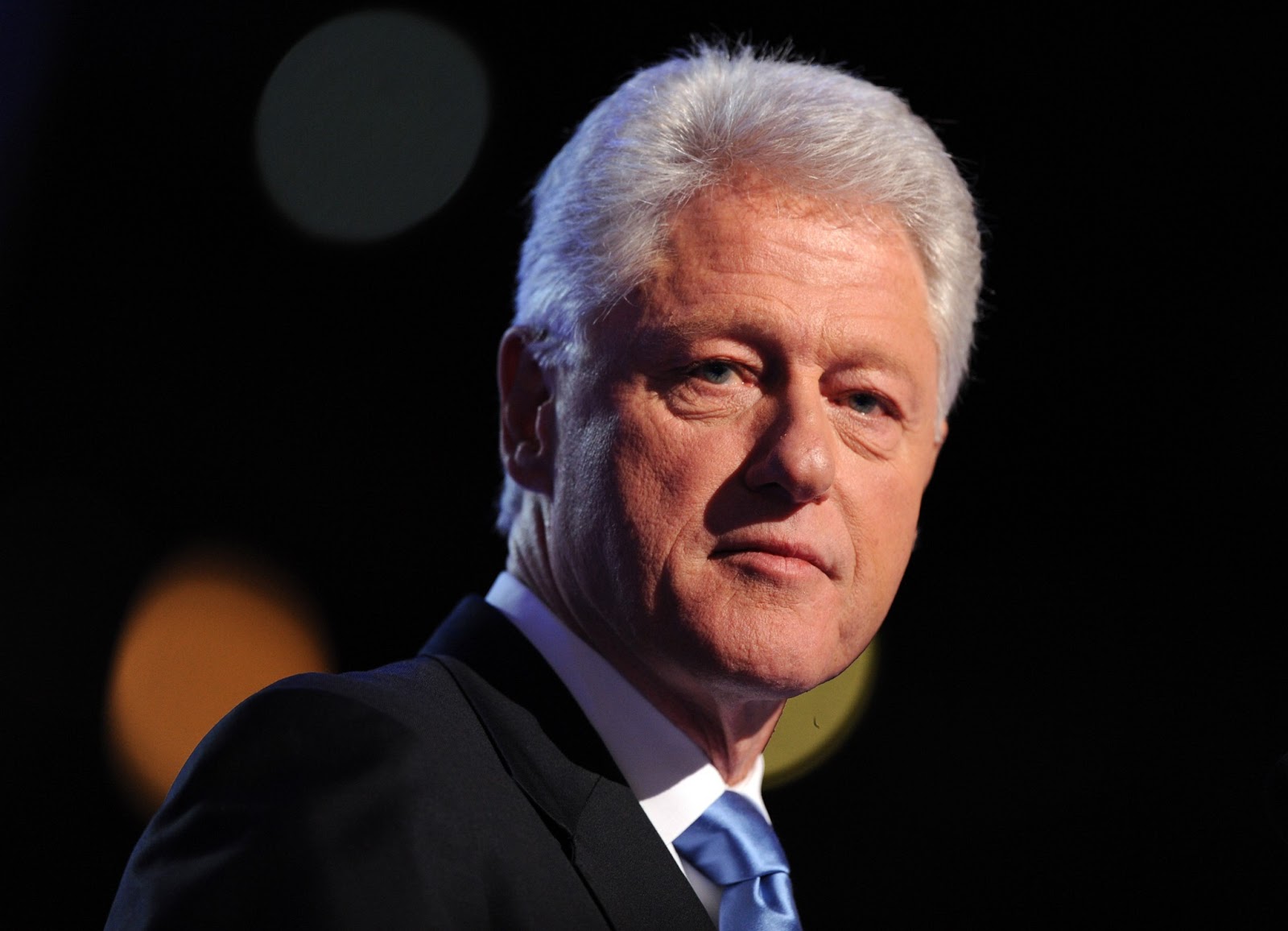
Bill Clinton: Representative or Opportunist?
Last week, I wrote an editorial urging people to celebrate Senator Rob Portman for coming about on the issue of gay marriage. This week, I wonder if Bill Clinton deserves the same consideration.
On September 21, 1996, Bill Clinton quietly signed a law that defines marriage as a union between a man and a woman for the purposes of federal law. This law, known as the Defense of Marriage Act (DOMA) makes it legal for states to not recognize gay marriages even if they are validly performed under the laws of a state in which gay marriage is legal. The law also denies federal marriage benefits that are given to straight couples. Now, 17 years later, Bill Clinton came out to say that DOMA is unconstitutional and urge the Supreme Court to overturn it.
Although they are both involved in politics, Bill Clinton and Rob Portman are two fairly different people. Portman is a conservative, a Republican senator whose son came out of the closet two years ago and helped him turn around on the issue of gay marriage. Bill Clinton is a liberal, a democrat who has been around gay people and had gay friends since 1968. Clinton is also the first democratic presidential candidate to court a gay vote. Nevertheless, unlike Rob Portman, who stood against the party line in publically announcing his support for gay marriage, Clinton “resolved not to get burned” in an election year. He signed DOMA in the middle of the night without a public ceremony to avoid drawing attention to it.
His supporters acknowledge and applaud Clinton’s evolution, citing the courage it takes for a President to admit that something he did while in office was unconstitutional. Others claim that Clinton’s latest anti-DOMA statements are as self-serving and opportunistic as his support of DOMA was in 1996.
The reality is that the country was not ready to support gay marriage in 1996. Even in 2013, it is arguable that the majority that supports gay marriage is slim (with only 53% in favor). Bill Clinton signed a law that was representative of the attitude of the country at the time, and that is what a leader of the United States, a representative republic, is elected to do. Clinton now supports gay marriage, echoing the attitude of the rest of the country. On the other hand, our Constitution is built with certain safeguards to avoid the creation of a tyranny of the majority. Our history is full of defining moments in which we have created greater protections for minority groups and opinions.
It seems to me that Bill Clinton chose politics over conscience. Twice. Though I believe that Bill Clinton sincerely supports marriage equality in 2013, I doubt he would have spoken out in its favor if public attitudes weren’t as open and accepting as they are. Perhaps it is his job to speak for the public only when there is majority support for what he’s saying, but a politician is not a puppet either. Politicians, presidents especially, are elected to represent the people, but also to lead.
Monday, March 25, 2013
Sadly, Supreme Court Unlikely to Find Constitutional Right to Gay Marriage
As the Supreme Court gears up to hear oral arguments in Hollingsworth v. Perry tomorrow, I think of adjectives such as historic, courageous, and just to describe the potentially wide-sweeping decision that the Court may render to legalize same-sex marriage across the country. However, I’m not very optimistic about such a decision's chances.
I worry that despite all the momentum there has been in advancing same-sex marriage rights, there hasn’t been enough of it for the Court to jump on the bandwagon. The Supreme Court tends to be reactionary, preferring to solidify change toward the end of a social movement instead of being on the front line. It is an institution outside of the democratic process and works hard to avoid usurping power away from voters.
Many argue, and I agree, that gay marriage is a Constitutional issue that doesn't belong to the whims of voters, but I doubt the Court will easily see things this way. In the wake of a nationally divisive case like Roe v. Wade, which Justice Ginsberg describes as "mov[ing] too far too fast," the Court may be extremely reluctant to take the same kind of activist action again. Popular referendums in the last election that, for the first time, upheld or legalized same-sex marriage in 4 states after 29 states amended their constitutions to ban it may signal to the Court that this social movement is in its infancy and is best left in the hands of democratic mechanisms.
There are many other arguments on both sides of this debate as well, but it’s anyone’s guess which ones the Court will find most persuasive. Despite what the justices often claim, they do not live in vacuums and consider controversial legal issues far in advance of when the issues first officially come before them. The justices then make the law far more often than they “find” it. I hope they find that gay couples are equal to their straight counterparts and make law to support that conclusion, but my instincts tell me they aren’t there yet.
Labels:
America,
Constitutional,
Daniel Davidson,
Gay,
Gay Marriage,
Hollingsworth v. Perry,
LGBT,
Prop 8,
Proposition 8,
Same-sex Marriage,
SCOTUS,
Supreme Court,
The Constitution,
usa
Monday, March 18, 2013
Stop Bashing Rob Portman
Lay off Rob Portman! He did a huge, great thing by coming out in support of gay marriage—the only
sitting Republican senator to do so. Ever.
Maybe he would have never done so if his son wasn’t gay, but
why should that matter? Channeling a
personal experience into activism is not self-serving. It’s how most of us go about discovering what
causes to champion in our daily lives. We
often don’t understand something until confronted with it head-on. Consider the number of HIV activists in the
gay community. How many of them worked
so hard for the cause before they became infected?
I am not arguing that as a senator—and as a human being—Rob Portman
shouldn’t soul search and champion causes that aren’t part of his personal
experience. As a U.S. senator, he’s
tasked with the responsibility of doing the right thing for all citizens, not
just the ones he can personally relate to. I hope he understands that and will act accordingly. There is no reason, though, to attack a man
who arrived at one right thing because he’s had a personal encounter with it.
Wednesday, February 13, 2013
State of Disunion
Considering that President Obama used his State of the Union address to call on Congress "to put the nation's interests before party," it is surprising that he chose the same platform to say--for the first time in one of his SOTU speeches--that "the state of our union is stronger."For years I have wanted Obama to echo the words of George W. Bush and tell the public that the state of the union is strong. Sure it always felt hollow when Bush said it, but it was a rhetorical device that evoked hope even in its absence of truth. Obama finally gave me what I've wanted for years...
...and left me entirely pissed off.
Though we have made some progress on the economy, energy and cutting the deficit, most of those achievements were accomplished only after months of political mudslinging and often coming within inches of completely toppling the economy. This shows--as Obama reflected at the start of his speech--that our union is anything but "stronger." It is fractured. Divided, even. The ideological split currently plaguing Washington seems to have been outmatched only one time in our history: During the Civil War.
I am not suggesting that the current divide is as powerful or traumatic as the Civil War was. However, the current divide hinders progress, discourages political participation by the 'average Joe,' and weakens America's position internationally.
No no, Mr. Obama. Methinks that our union is anything but "stronger" at the moment.
Thursday, January 31, 2013
Thank You, America
21 years ago today, my family arrived in America. On January 31, 1992, I woke up on an airplane and peeked out the window just as the sun began to rise over the horizon and shine its rays over New York City. I was five years old then and much too young to appreciate this most remarkable and poetic moment of my life. I literally opened my eyes to see the dawning of a bright, new future.
Of course, my life in America has not been perfect or easy. My family faced many challenges over the past 21 years, and despite how hard we’ve worked to achieve the financial American Dream, we’ve never come close to breaking the middle class barrier. My parents’ advanced degrees in engineering and literature were not highly valued in the United States. That coupled with my parents’ middle age (they were in their mid and late 40s when they arrived) and developing health problems made it difficult for them to find lucrative employment opportunities. I spent much of my childhood wanting toys that my parents could not afford or missing school trips that my classmates took for granted.
Nevertheless, my parents have been able to achieve a different kind of—and much more valuable—American Dream. From 1992 on, they worked hard to educate their children. They managed to put me through private school for thirteen years,* send my older sister to college to earn two degrees, see my older brother become an optometrist, and help send me to one of this country’s top universities and law schools. They did not do it alone, of course. Their children understood that we had to contribute to our own future, which meant we had to work hard for money and scholarships. It was not easy for any of us, but we’ve come out the other side wiser and with greater strength of character.
Though my parents were educated professionals in Russia, their careers could only advance so far because of their religion. Even though the Soviet Union claimed to be free of class and religion, identity documents listed one’s religious affiliation in plain sight. Anti-Semitism was prevalent in Russia proper, as well as the Muslim Republic of Uzbekistan where my family lived. As a result, my father was held back from top military rank and postings despite over twenty years of service. My mother could not finish law school.
My parents have said time and again that never in their wildest dreams did they imagine that their children would be educated professionals, and that one of their children would achieve such educational heights in a country that is not his birthplace.
The United States of America has given my family incredible opportunities. Though my parents do not live luxuriously, they are secure in their home and thrive with what they have. Their children have world-class educations, own homes of their own, and are raising families.** And, most importantly of all, they have all this in a country that is truly free, that allows people of any religion or background to thrive, and that gives so much to people who are willing to work hard.
I have written many other blog posts praising and critiquing America. I stand firmly by my arguments that its political system is too fractured and that it too often does not live up to its own ideals.
Nevertheless, I am proud and grateful to be an American. The beauty of the United States is that, though it is not perfect, it is ever evolving for the better, and it allows its citizens to participate in creating positive change. When I think about how different my life would be if I lived in Russia now—an allegedly free, democratic country that continues to crackdown on free expression and individual rights—I recognize how incredibly blessed I am to be an American.
21 years of struggle and triumph have made for an incredible adventure, and have created a appreciative and, hopefully, better man.
*They could not afford most of the tuition, but I worked hard to earn scholarships.
**I still rent and remain single, but I am also the youngest and just finished school.
Wednesday, November 7, 2012
The Grand Old Party Needs New Direction
Based on the results of the 2012
election, one thing is becoming increasingly clear. The Grand Old Party (GOP)
is exactly that: OLD. Last night’s
election of the first openly gay senator as well as passage of same-sex
marriage by popular vote in two states and the legalization of marijuana in two
states signals that social norms in this country are changing—and changing
fast. Just eight years after Rick
Santorum, former Republican Senator from Pennsylvania ,
and President George W. Bush turned same-sex marriage into a divisive national
social issue, and just four years after California
passed Proposition 8, voters have turned out and turned policy around. This is the progress many liberals and more
moderately inclined Americans have hoped for, but this is not the kind of
progress that should be linked solely to the campaigns and policies of Democratic
or Independent officials.
If Mitt
Romney hadn’t come out so staunchly against immigration or against things like
abortion and same-sex marriage, he probably would have won this election. CNN’s protestations to the contrary, the
media’s description of Obama’s victory as “decisive” is overstated. His lead in the popular vote is narrow and, even
with Florida
under his belt, he still wins with less electoral votes than he did with four
years ago. The candidates and analysts
alike maintained that economy was a central focus in this campaign, but the
discourse to which I was a party to over the last several months heavily
focused on social policy such as overturning the Defense of Marriage Act and
making sure that the next President does not appoint ultraconservative Justices
to the Supreme Court. For many, it
seems, considerations of the next four years took a backseat to considerations
about the next thirty years.
Amid this
climate, Republican candidates stated that children born from legitimate rape were part of God’s plan for women and continued to run on platforms that would illegalize
abortion and treat gays as second-class citizens. Romney, who was considered to be fairly
moderate as the governor of Massachusetts ,
moved further to the right and yet didn’t seem to produce a solid position
point on very much. This is where the
Grand Old Party clearly failed. Long
ago, the GOP may have been captured by conservative Christian elements, but the
time has come to start moving beyond that increasingly smaller base and embrace
a larger, evolving demographic. Republicans need to offer the country a truly different direction, one
that focuses on government and economic policy and does not alienate minorities
and strip people of all walks of life of their basic human dignity. It’s time for the Rick Santorums, Sarah
Palins, and Michelle Bachmanns of the party to adopt a more moderate platform,
or step aside entirely. Note that
Santorum was voted out of his senate seat, lost the Republican primary, and
that Bachmann won reelection by a sizably narrow margin. As many news media stations pointed out last
night and early this morning, relying on old white men to vote them into power
as in years and decades past, representatives of the Grand Old Party fumbled
big time.
![]() |
| A divided America showcasing changing demographics - NYT.com |
I implore
Republicans, or independents who supported Romney, to spend the next four years
working within the Grand Old Party to help begin the process of
reformation. I respect the Republican
Party for having differing economic policy goals than the Democrats. Our democracy is strong when opposing
viewpoints are explored, debated, and consistently refined to form a more
perfect union. However, we must be
careful not to be so opposed to one another as to keep dividing the country and
continue holding presidential elections in which we feel that we’re merely choosing
the lesser of two evils.* Parties should have
enough opposing viewpoints to make their existence meaningful, and to make
their disagreements engines of change and progress. However, a party cannot be so out-of-touch
with the general population that it renders its existence distracting—maybe
even annoying—but essentially useless.
This is what seems to be happening to the Republicans. Refocusing the Grand Old Party on its core
beliefs—small government, lower taxes, and greater opportunities for generating
wealth through private entrepreneurship without getting entangled in outdated
social policies—will restore the Republican Party to a position of import and
respect. Alternatively, leaving the
party in the hands of extremists weakens the party further and hurts the
country that we all—Democrats, Independents, and Republicans alike—love.
*The 2008 election was not a choice between the lesser of two evils, as both parties ran history making candidates and offered meaningful discussions of change, hope and a strong direction for the country. However, this presidential race felt like a return to the Bush/Kerry election cycle. Judging by the numbers by which Obama won reelection as well as media analysis about independent voters, it seems that many voters were not particularly strongly enthused by either candidate.
Subscribe to:
Posts (Atom)