Showing posts with label Politics. Show all posts

Tuesday, March 26, 2013

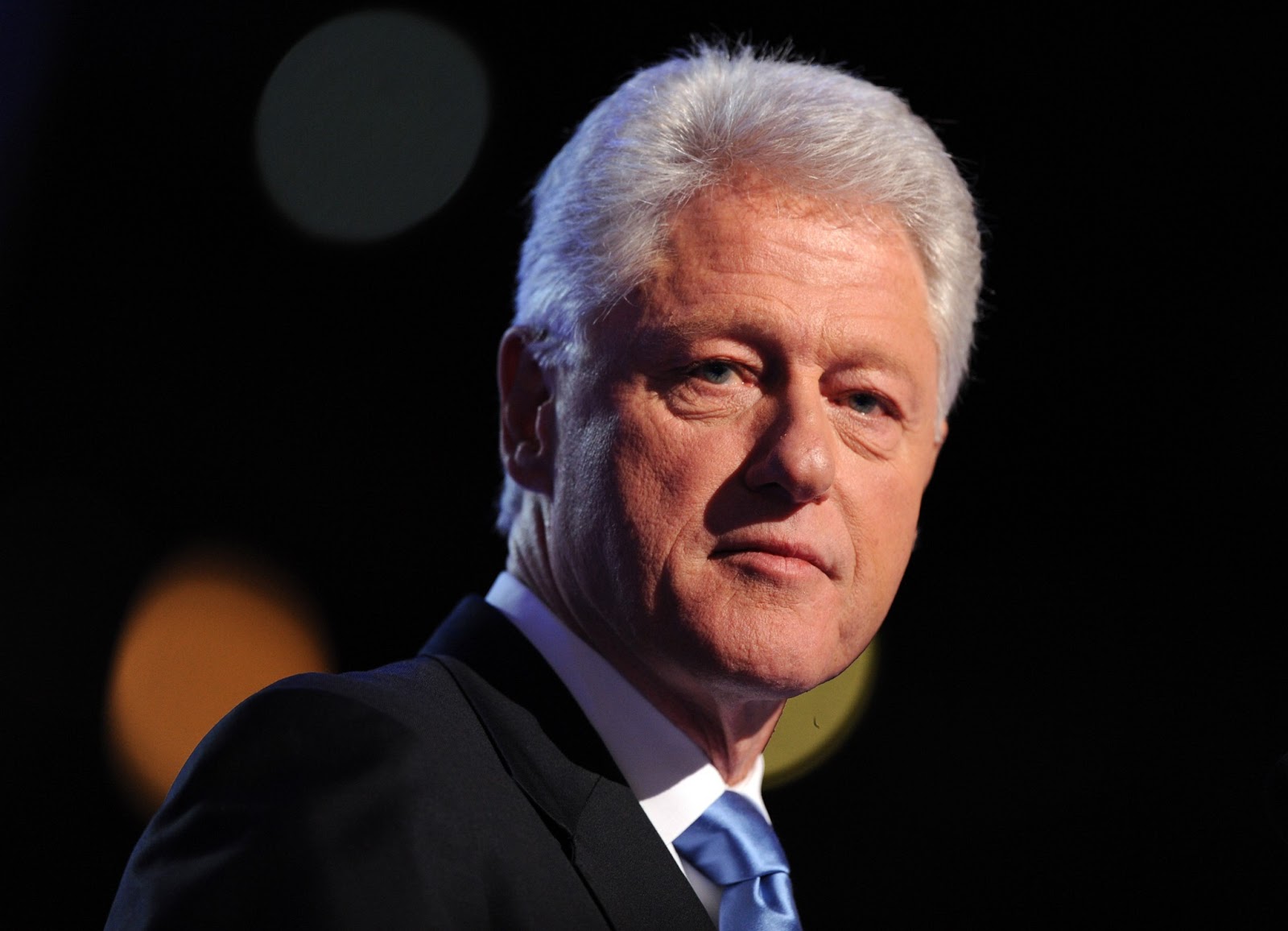
Bill Clinton: Representative or Opportunist?


Last week, I wrote an editorial urging people to celebrate Senator Rob Portman for coming about on the issue of gay marriage. This week, I wonder if Bill Clinton deserves the same consideration. On September 21, 1996, Bill Clinton quietly signed a law that defines marriage as a union between a man and a woman for the purposes of federal law. This law, known as the Defense of Marriage Act (DOMA) makes it legal for states to not recognize gay marriages even if they are validly performed under the laws of a state in which gay marriage is legal. The law also denies federal marriage benefits that are given to straight couples. Now, 17 years later, Bill Clinton came out to say that DOMA is unconstitutional and urge the Supreme Court to overturn it. Although they are both involved in politics, Bill Clinton and Rob Portman are two fairly different people. Portman is a conservative, a Republican senator whose son came out of the closet two years ago and helped him turn around on the issue of gay marriage. Bill Clinton is a liberal, a democrat who has been around gay people and had gay friends since 1968. Clinton is also the first democratic presidential candidate to court a gay vote. Nevertheless, unlike Rob Portman, who stood against the party line in publically announcing his support for gay marriage, Clinton “resolved not to get burned” in an election year. He signed DOMA in the middle of the night without a public ceremony to avoid drawing attention to it. His supporters acknowledge and applaud Clinton’s evolution, citing the courage it takes for a President to admit that something he did while in office was unconstitutional. Others claim that Clinton’s latest anti-DOMA statements are as self-serving and opportunistic as his support of DOMA was in 1996. The reality is that the country was not ready to support gay marriage in 1996. Even in 2013, it is arguable that the majority that supports gay marriage is slim (with only 53% in favor). Bill Clinton signed a law that was representative of the attitude of the country at the time, and that is what a leader of the United States, a representative republic, is elected to do. Clinton now supports gay marriage, echoing the attitude of the rest of the country. On the other hand, our Constitution is built with certain safeguards to avoid the creation of a tyranny of the majority. Our history is full of defining moments in which we have created greater protections for minority groups and opinions. It seems to me that Bill Clinton chose politics over conscience. Twice. Though I believe that Bill Clinton sincerely supports marriage equality in 2013, I doubt he would have spoken out in its favor if public attitudes weren’t as open and accepting as they are. Perhaps it is his job to speak for the public only when there is majority support for what he’s saying, but a politician is not a puppet either. Politicians, presidents especially, are elected to represent the people, but also to lead.

Tuesday, February 26, 2013

Wow!

“Dozens of prominent Republicans — including top advisers to former President George W. Bush, four former governors and two members of Congress — have signed a legal brief arguing that gay people have a constitutional right to marry,” The New York Times reported this morning.

“[C]onservative groups said the White House had informed them that [President Bush] would soon endorse efforts to pass an amendment to the United States Constitution defining marriage to be between a man and a woman,” The New York Times reported nine years earlier, on February 5, 2004.

I still remember the boy who sat in his room 10 years ago following the twists and turns of the Lawrence v. Texas case, Rick Santorum's subsequent hateful comments, and George W. Bush's divisive campaign against gays across America. That boy never imagined that progress and change would happen so quickly, if they would ever happen at all.

Today, that boy is a man who is proud of his country and its leaders and knows that everyone he loves is one step closer to the freedom and equality promised to all Americans.


Wednesday, February 13, 2013

State of Disunion

Considering that President Obama used his State of the Union address to call on Congress "to put the nation's interests before party," it is surprising that he chose the same platform to say--for the first time in one of his SOTU speeches--that "the state of our union is stronger."

For years I have wanted Obama to echo the words of George W. Bush and tell the public that the state of the union is strong. Sure it always felt hollow when Bush said it, but it was a rhetorical device that evoked hope even in its absence of truth. Obama finally gave me what I've wanted for years...

...and left me entirely pissed off.

Though we have made some progress on the economy, energy and cutting the deficit, most of those achievements were accomplished only after months of political mudslinging and often coming within inches of completely toppling the economy. This shows--as Obama reflected at the start of his speech--that our union is anything but "stronger." It is fractured. Divided, even. The ideological split currently plaguing Washington seems to have been outmatched only one time in our history: During the Civil War.

I am not suggesting that the current divide is as powerful or traumatic as the Civil War was. However, the current divide hinders progress, discourages political participation by the 'average Joe,' and weakens America's position internationally.

No no, Mr. Obama. Methinks that our union is anything but "stronger" at the moment.

Wednesday, November 7, 2012

The Grand Old Party Needs New Direction

Based on the results of the 2012 election, one thing is becoming increasingly clear. The Grand Old Party (GOP) is exactly that: OLD. Last night’s election of the first openly gay senator as well as passage of same-sex marriage by popular vote in two states and the legalization of marijuana in two states signals that social norms in this country are changing—and changing fast. Just eight years after Rick Santorum, former Republican Senator from Pennsylvania, and President George W. Bush turned same-sex marriage into a divisive national social issue, and just four years after California passed Proposition 8, voters have turned out and turned policy around. This is the progress many liberals and more moderately inclined Americans have hoped for, but this is not the kind of progress that should be linked solely to the campaigns and policies of Democratic or Independent officials.
            If Mitt Romney hadn’t come out so staunchly against immigration or against things like abortion and same-sex marriage, he probably would have won this election. CNN’s protestations to the contrary, the media’s description of Obama’s victory as “decisive” is overstated. His lead in the popular vote is narrow and, even with Florida under his belt, he still wins with less electoral votes than he did with four years ago. The candidates and analysts alike maintained that economy was a central focus in this campaign, but the discourse to which I was a party to over the last several months heavily focused on social policy such as overturning the Defense of Marriage Act and making sure that the next President does not appoint ultraconservative Justices to the Supreme Court. For many, it seems, considerations of the next four years took a backseat to considerations about the next thirty years.
            Amid this climate, Republican candidates stated that children born from legitimate rape were part of God’s plan for women and continued to run on platforms that would illegalize abortion and treat gays as second-class citizens. Romney, who was considered to be fairly moderate as the governor of Massachusetts, moved further to the right and yet didn’t seem to produce a solid position point on very much. This is where the Grand Old Party clearly failed. Long ago, the GOP may have been captured by conservative Christian elements, but the time has come to start moving beyond that increasingly smaller base and embrace a larger, evolving demographic. Republicans need to offer the country a truly different direction, one that focuses on government and economic policy and does not alienate minorities and strip people of all walks of life of their basic human dignity. It’s time for the Rick Santorums, Sarah Palins, and Michelle Bachmanns of the party to adopt a more moderate platform, or step aside entirely. Note that Santorum was voted out of his senate seat, lost the Republican primary, and that Bachmann won reelection by a sizably narrow margin. As many news media stations pointed out last night and early this morning, relying on old white men to vote them into power as in years and decades past, representatives of the Grand Old Party fumbled big time.
A divided America showcasing changing demographics - NYT.com
            I implore Republicans, or independents who supported Romney, to spend the next four years working within the Grand Old Party to help begin the process of reformation. I respect the Republican Party for having differing economic policy goals than the Democrats. Our democracy is strong when opposing viewpoints are explored, debated, and consistently refined to form a more perfect union. However, we must be careful not to be so opposed to one another as to keep dividing the country and continue holding presidential elections in which we feel that we’re merely choosing the lesser of two evils.* Parties should have enough opposing viewpoints to make their existence meaningful, and to make their disagreements engines of change and progress. However, a party cannot be so out-of-touch with the general population that it renders its existence distracting—maybe even annoying—but essentially useless.  This is what seems to be happening to the Republicans. Refocusing the Grand Old Party on its core beliefs—small government, lower taxes, and greater opportunities for generating wealth through private entrepreneurship without getting entangled in outdated social policies—will restore the Republican Party to a position of import and respect.  Alternatively, leaving the party in the hands of extremists weakens the party further and hurts the country that we all—Democrats, Independents, and Republicans alike—love.

*The 2008 election was not a choice between the lesser of two evils, as both parties ran history making candidates and offered meaningful discussions of change, hope and a strong direction for the country.  However, this presidential race felt like a return to the Bush/Kerry election cycle. Judging by the numbers by which Obama won reelection as well as media analysis about independent voters, it seems that many voters were not particularly strongly enthused by either candidate.